
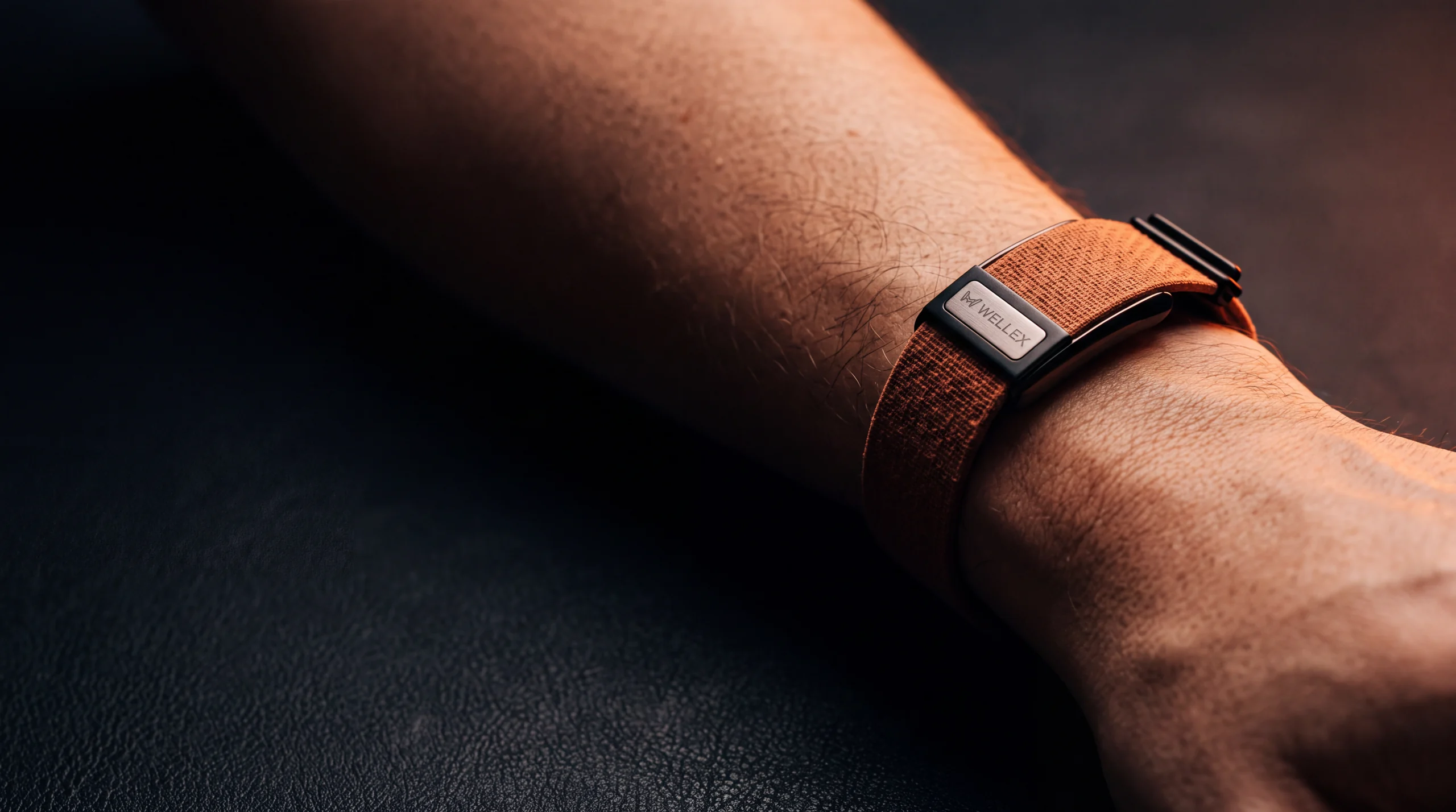

A band, a number, and something that explains the number.
No compensation plan in this deck. Nothing to sign, nothing to join. Just what a person puts on their wrist in the morning and what it gives back by the evening.
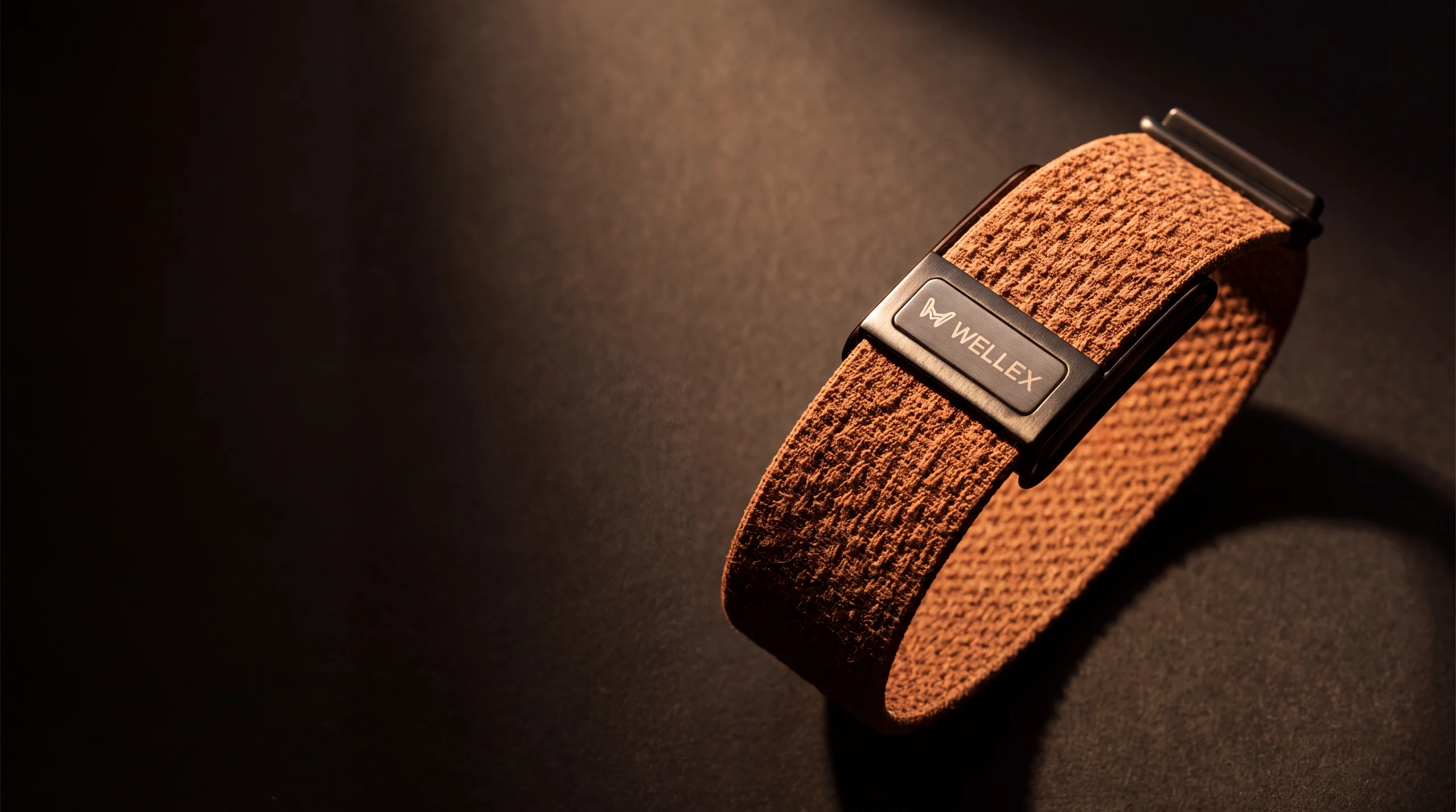
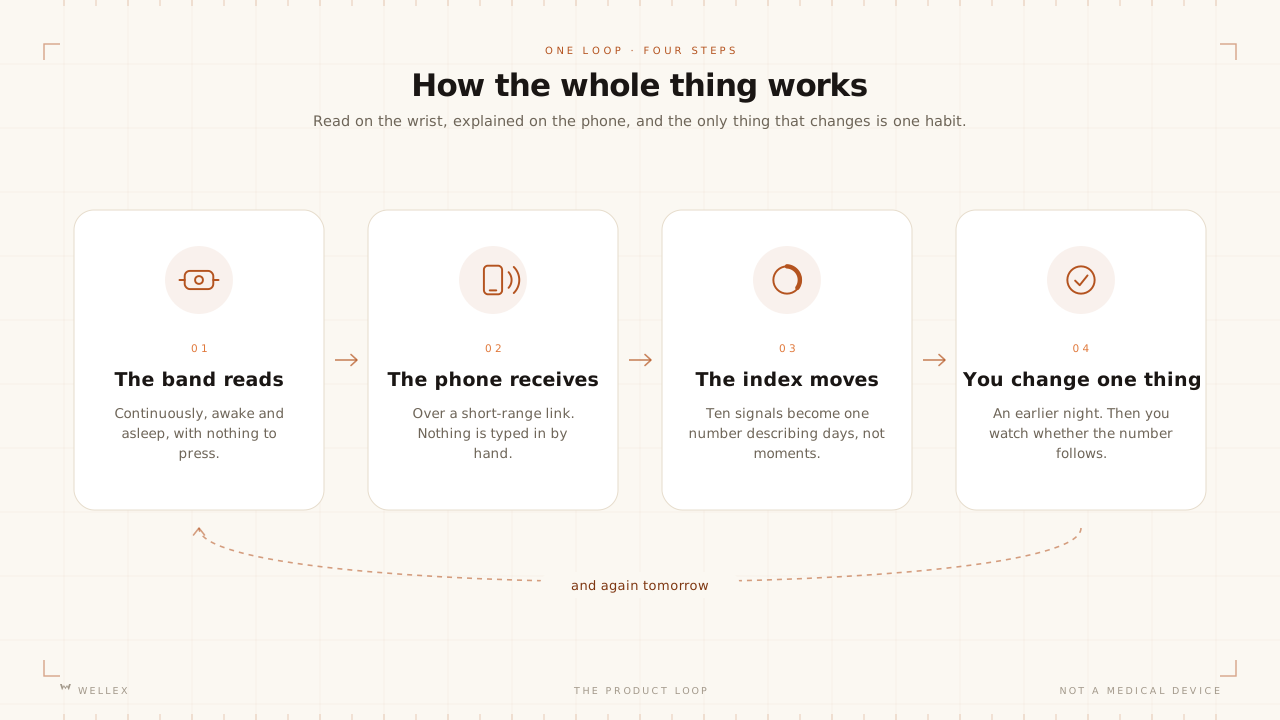 Diagram of the Wellex loop: the band reads, the phone receives, the index moves, one habit changes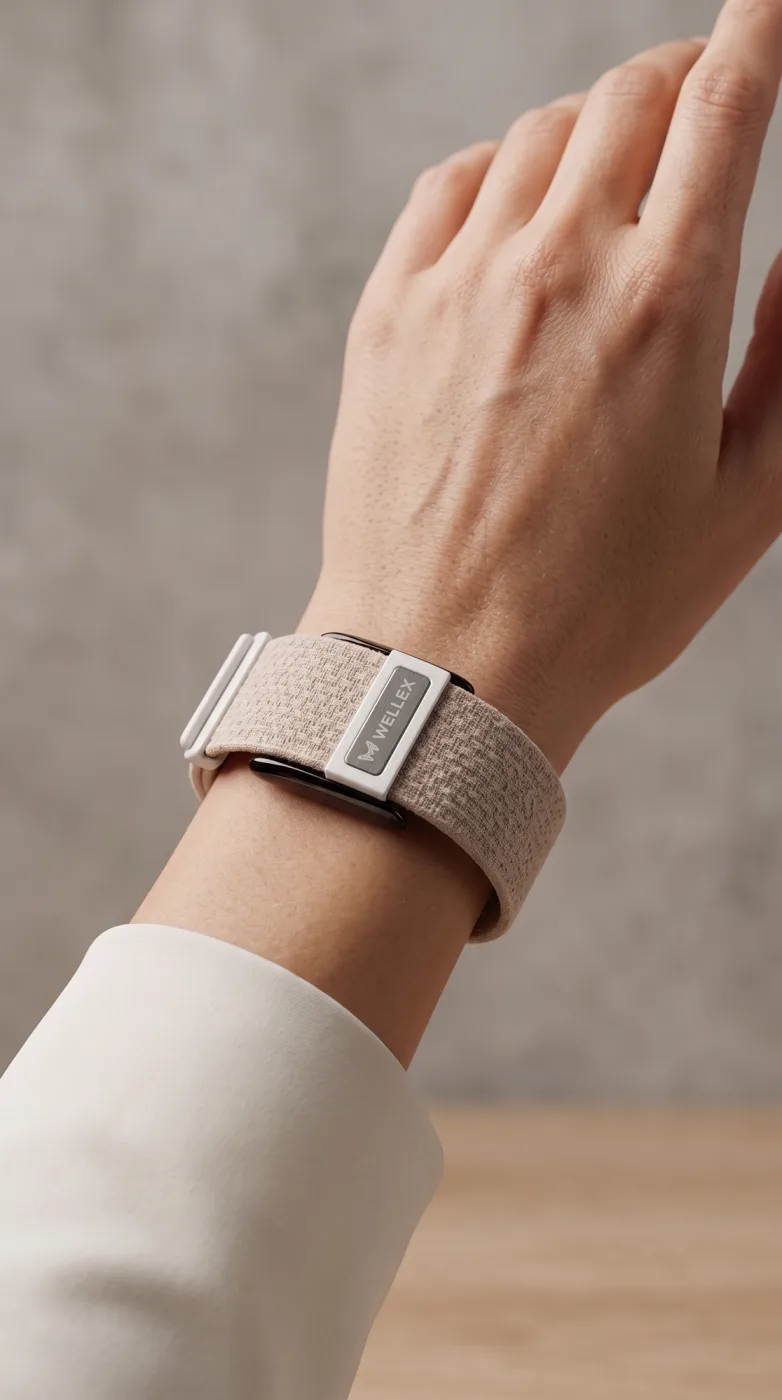
A band with no screen — worn, not consulted.
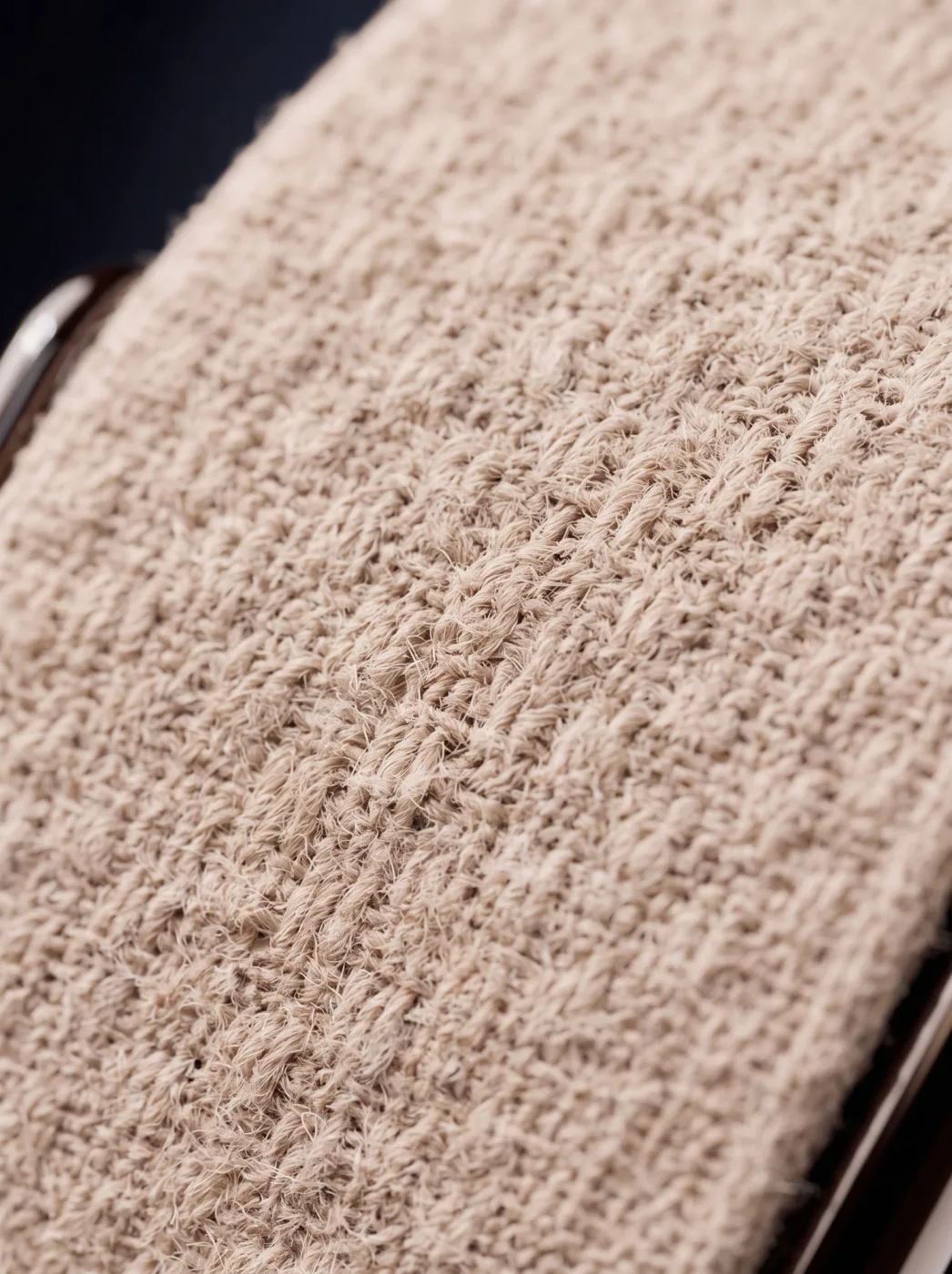
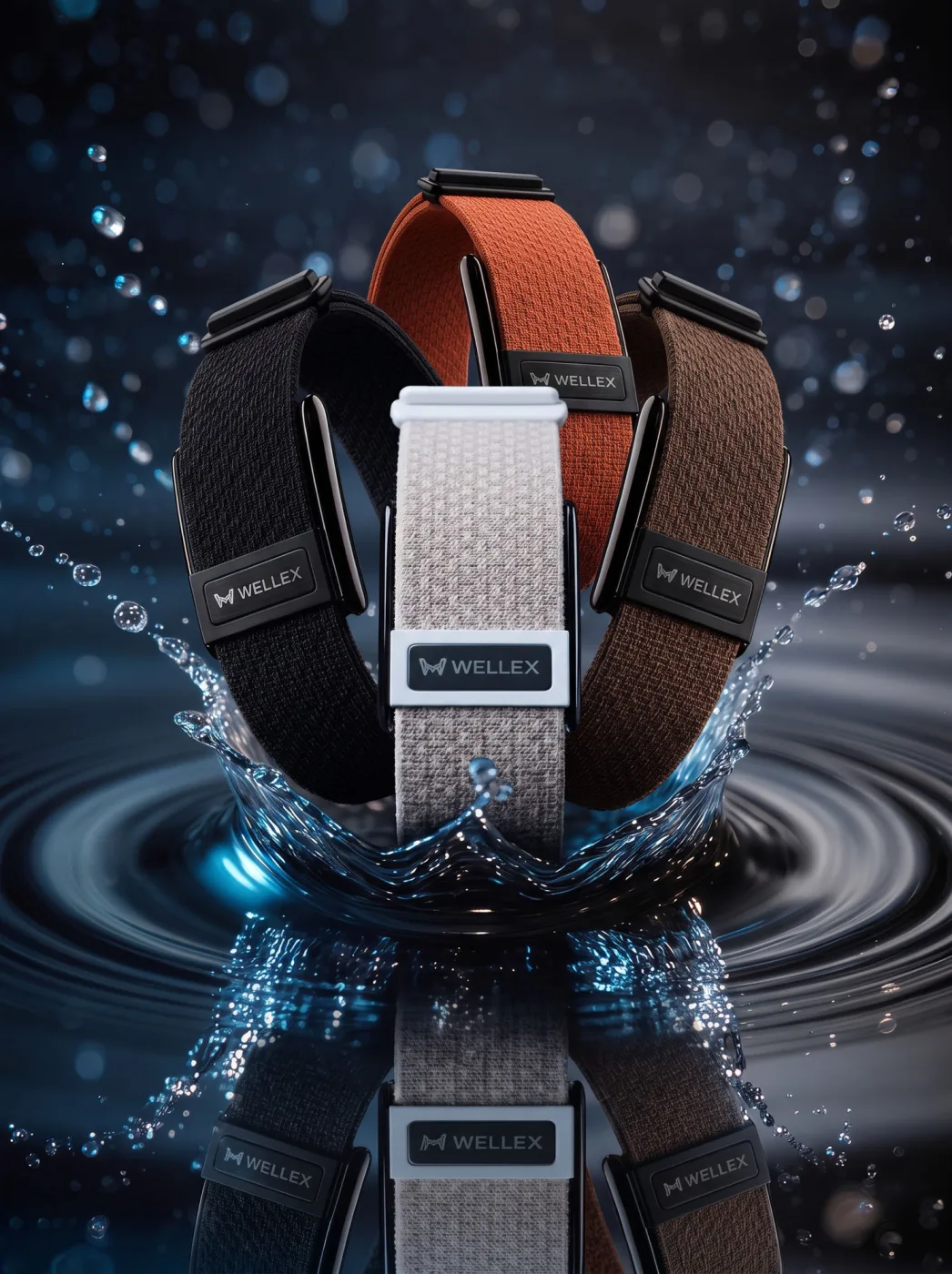
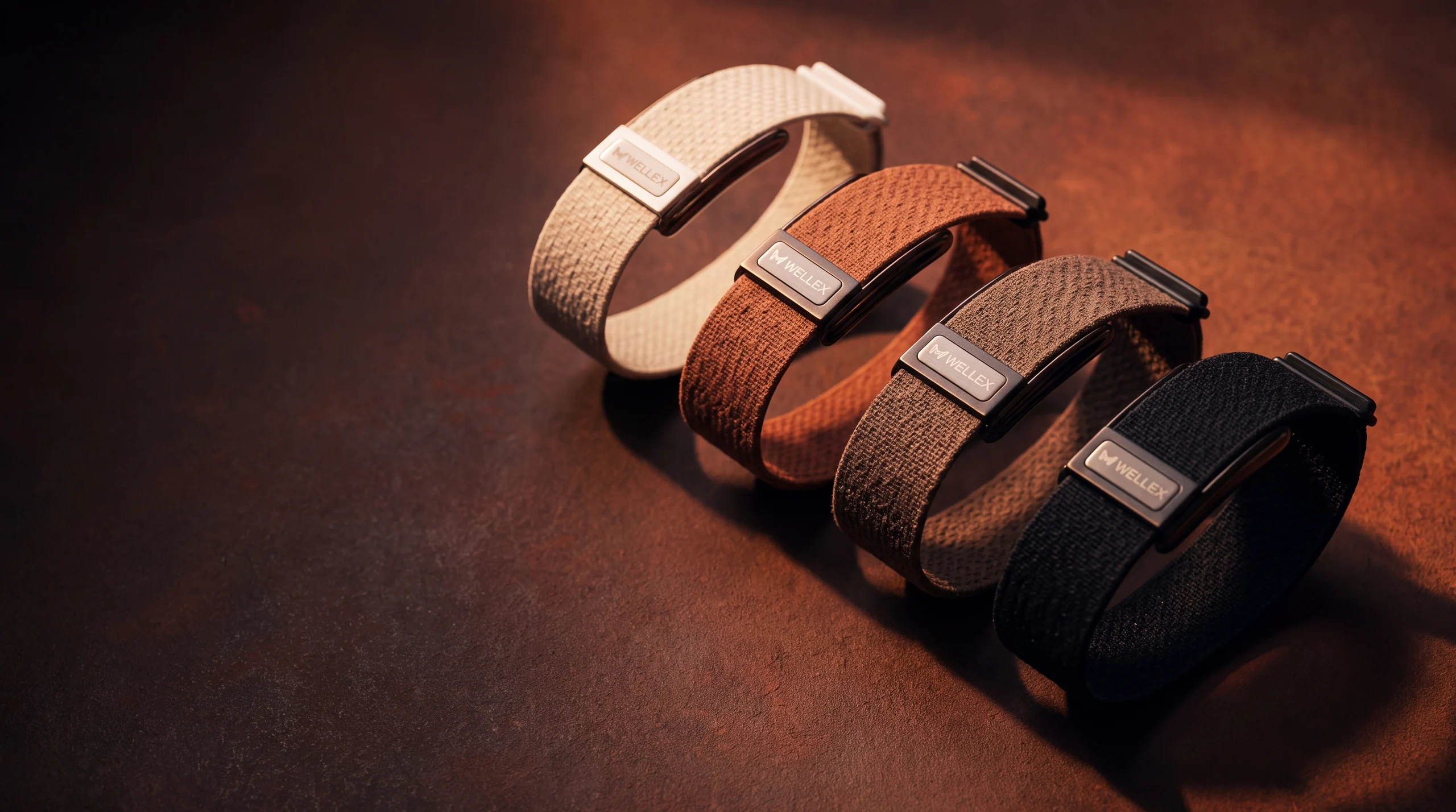
Soft woven strap, a small capsule, a magnetic clasp. It does not light up, does not buzz for messages and has nothing to swipe. You put it on and it stops asking for attention.
The screen was removed on purpose. A band you take off measures nothing.
A screen is the thing that drains it
Display is the largest single draw in any wearable. Take it away and the charging cycle stops competing with the night — which is exactly when the most valuable signal is there to be read.
A screen is the thing that interrupts
Anything with a display eventually becomes a second phone on your wrist. The band deliberately cannot do that: there is nowhere for a notification to appear.
Everything the band reads is shown in the app, on a phone, when the person chooses to look — not pushed at them on the wrist.
Ten signals, read continuously, not on request.
None of them is remarkable alone — every one is available somewhere. What is unusual is that they are read together, all day and all night, by something you never have to remember to switch on.
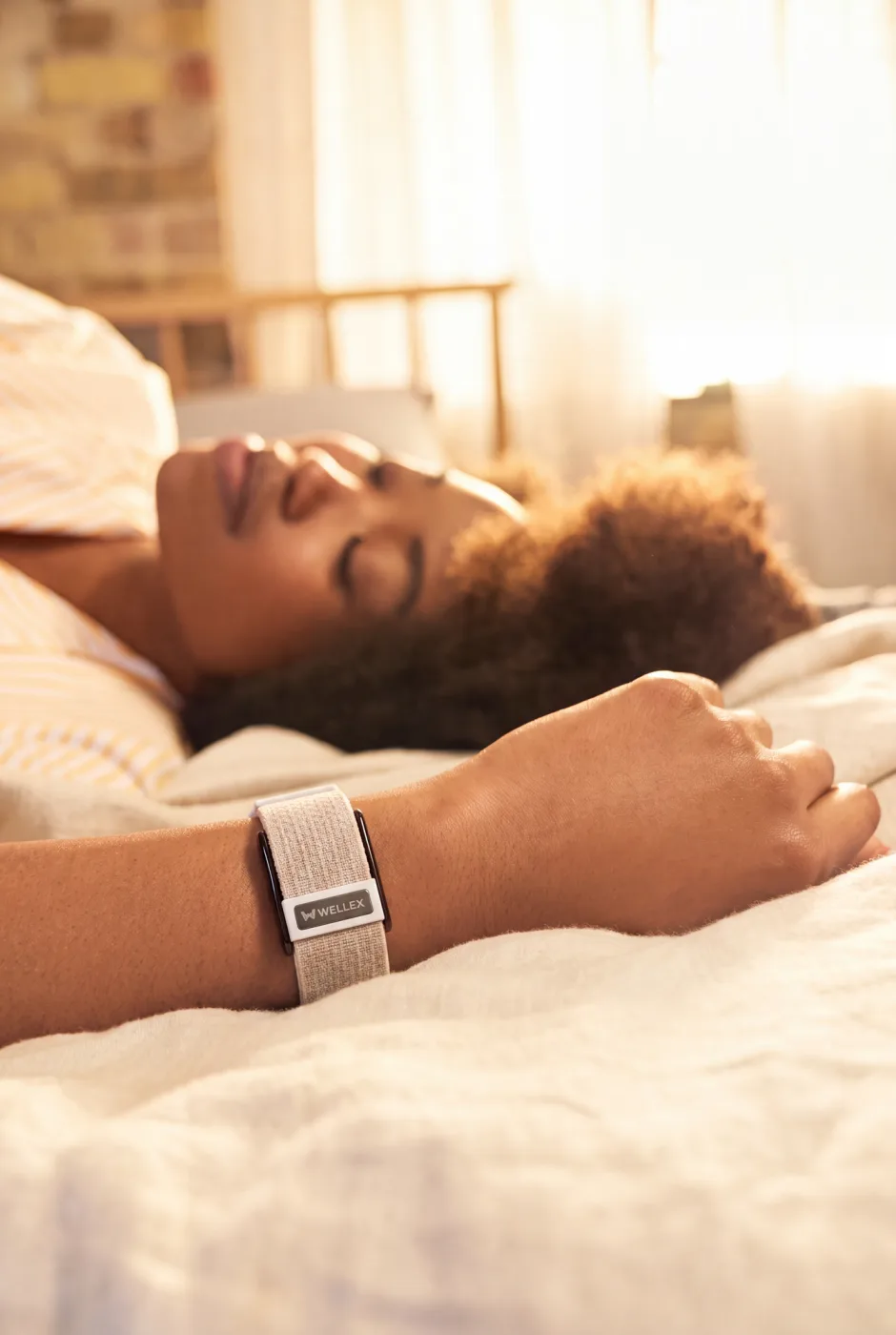
The night is where recovery is decided — and where a device usually sits on a charger.
Sleep length, how it was structured, how the heart behaved through it, how far body temperature drifted. In the morning that is one line, not a report — and it is the line most people find hardest to argue with.


Movement counts, but so does the recovery around it.
A hard session on a rested body and the same session on an exhausted one are not the same event, and most trackers record them identically. Reading the night is what lets the day be read correctly.
One number, and the four things that moved it.
- 01The numberToday’s index and how far it moved since yesterday. Nothing else competes with it for the top of the screen.
- 02The four groups behind itRecovery, sleep, activity, stress. Tap any of them and the signals underneath open up.
- 03One sentence about youWhat your own habits did this week — not a general tip that would fit anybody.
- 04An honest first fortnightThe app says outright that it is still building your baseline rather than showing a confident number it has not earned. The small flame counts consecutive days worn — the one figure here that measures nothing but persistence.
These are screenshots of the shipping app, not drawings of one. The figures in them belong to one person on one day and are there to show the layout, not to promise a result.
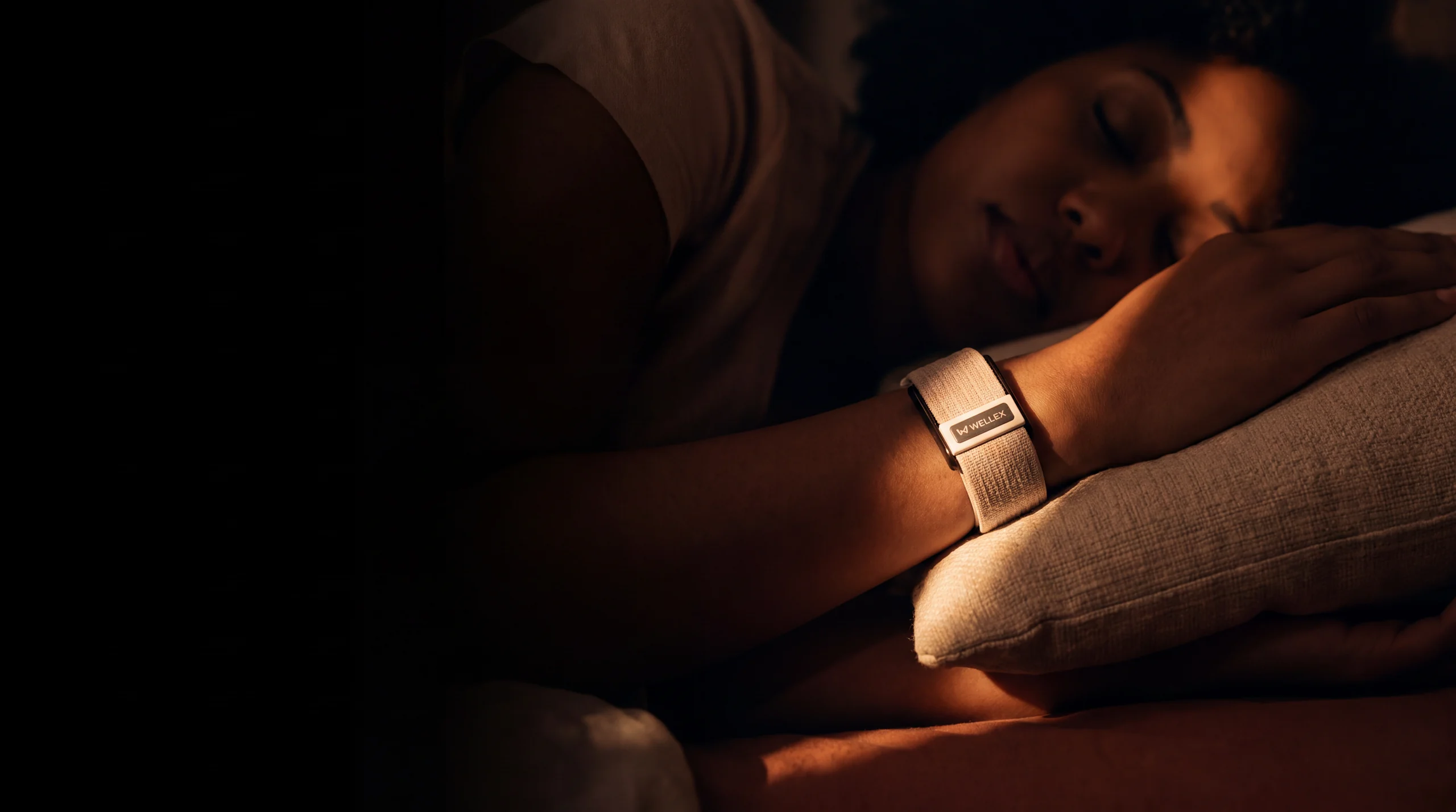
Most of what this measures happens while you are asleep.
Which is why the band has no screen, why it charges in minutes rather than overnight, and why the single instruction that matters is to leave it on. Take the night out and most of the index goes with it.
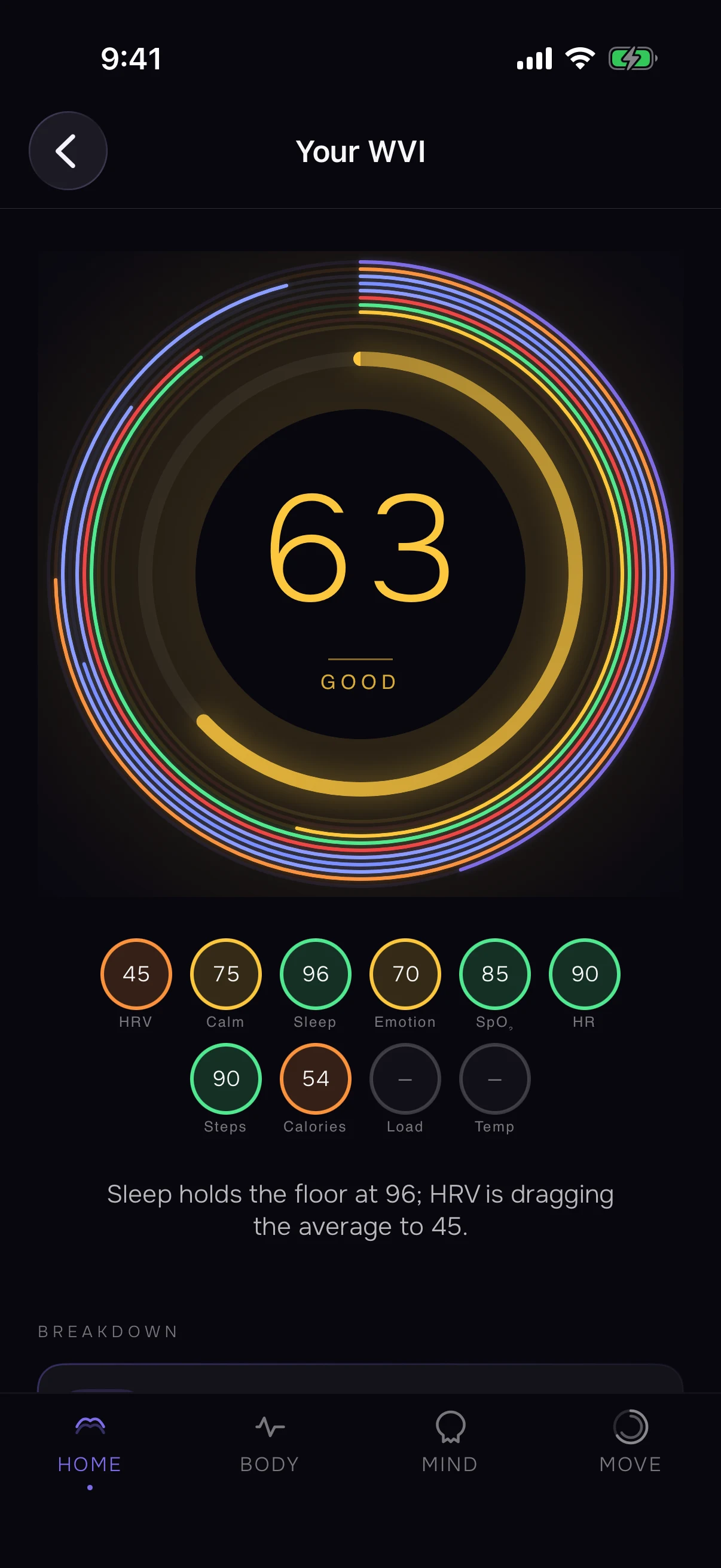
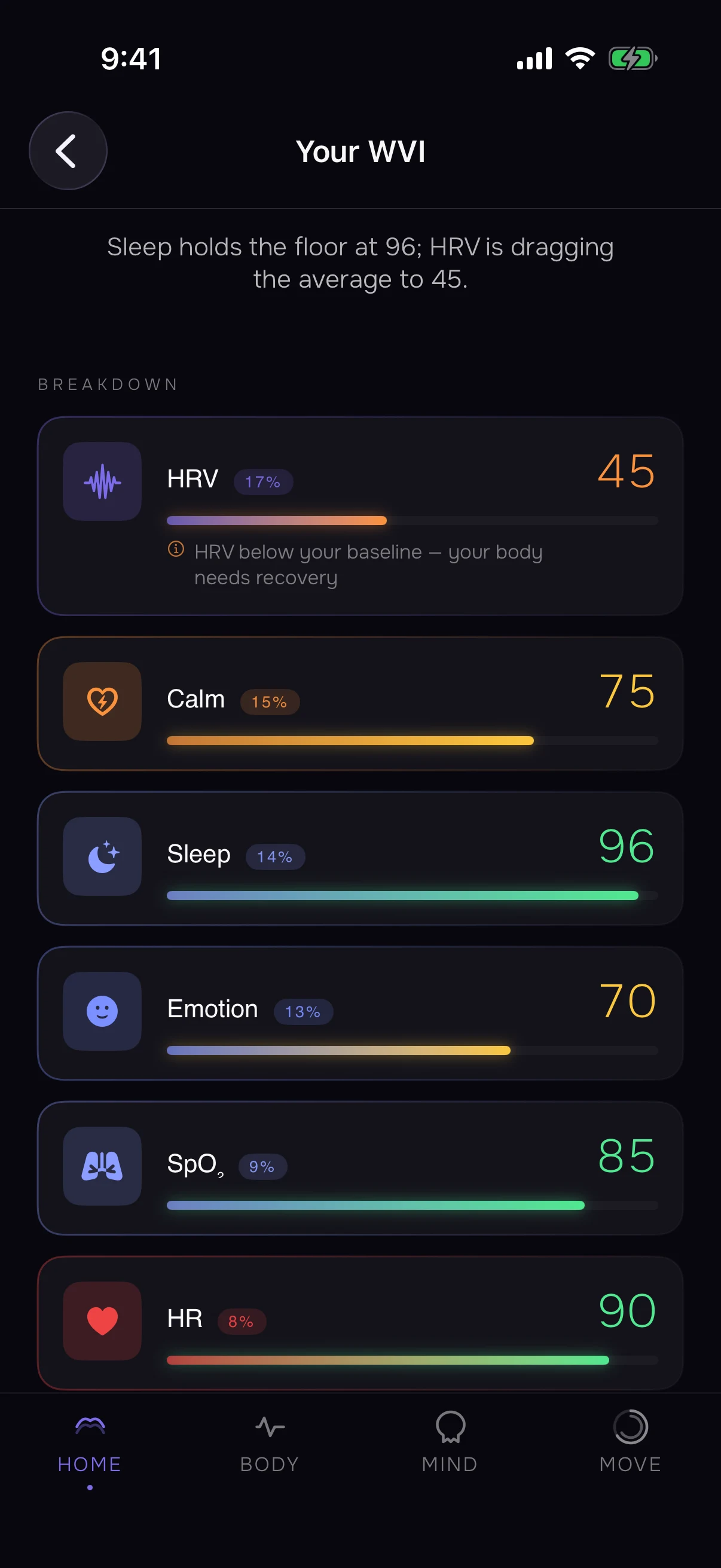
Every signal behind the index is shown — including the one dragging it down.
- 01The ring is the breakdownEach signal takes an arc in proportion to what it contributed. The weighting is displayed rather than asserted in a footnote.
- 02Every signal, with its own valueHeart-rate variability, calm, sleep, emotion, oxygen, pulse, movement, temperature and the rest — each one readable on its own.
- 03It names the weak spotA product that only reports good news gets ignored. This screen says which signal lifted the index and which one is holding it back.
Being able to open the number is the point. An index nobody can take apart is asking for trust it has not earned.
The signals are multiplied, not averaged. One weak signal pulls the whole number down.
A weak signal cannot be bought back
A hard workout does not compensate for a night without sleep. An average would let it; multiplying the signals together does not. Whatever is worst in your week is what the index follows.
The same choice the UN made
The Human Development Index moved to this kind of average in 2010, for exactly this reason: being excellent in one dimension should not be allowed to hide a critical weakness in another.
This is also why the index moves slowly and why it is hard to perform for. It rewards the weakest part of a week rather than the best one.
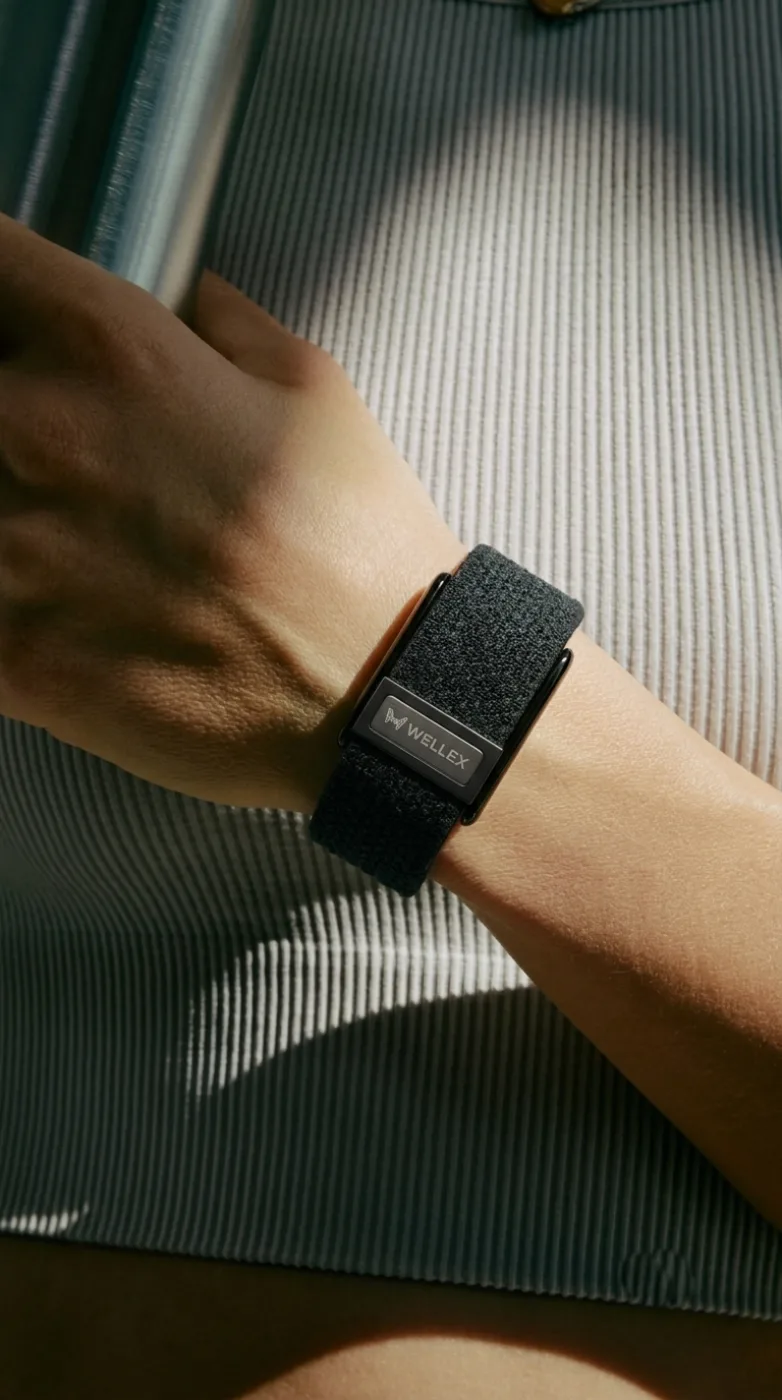
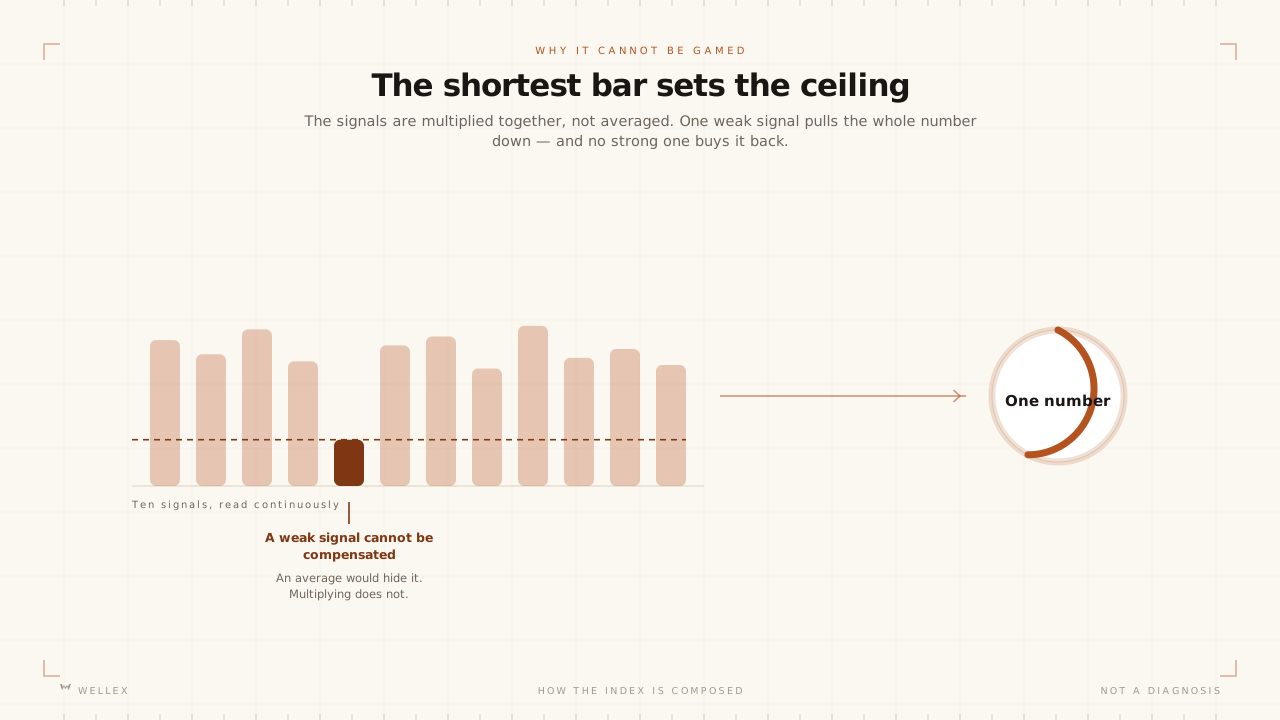 Diagram: ten signal bars with one short bar setting the ceiling, collapsing into a single number
A number nobody understands is just anxiety. This one fits in a sentence.
How the index is composed is documented rather than described in marketing terms — it can be read in full, and it is the same for everybody.

Your training is read against your recovery, not against somebody else’s target.
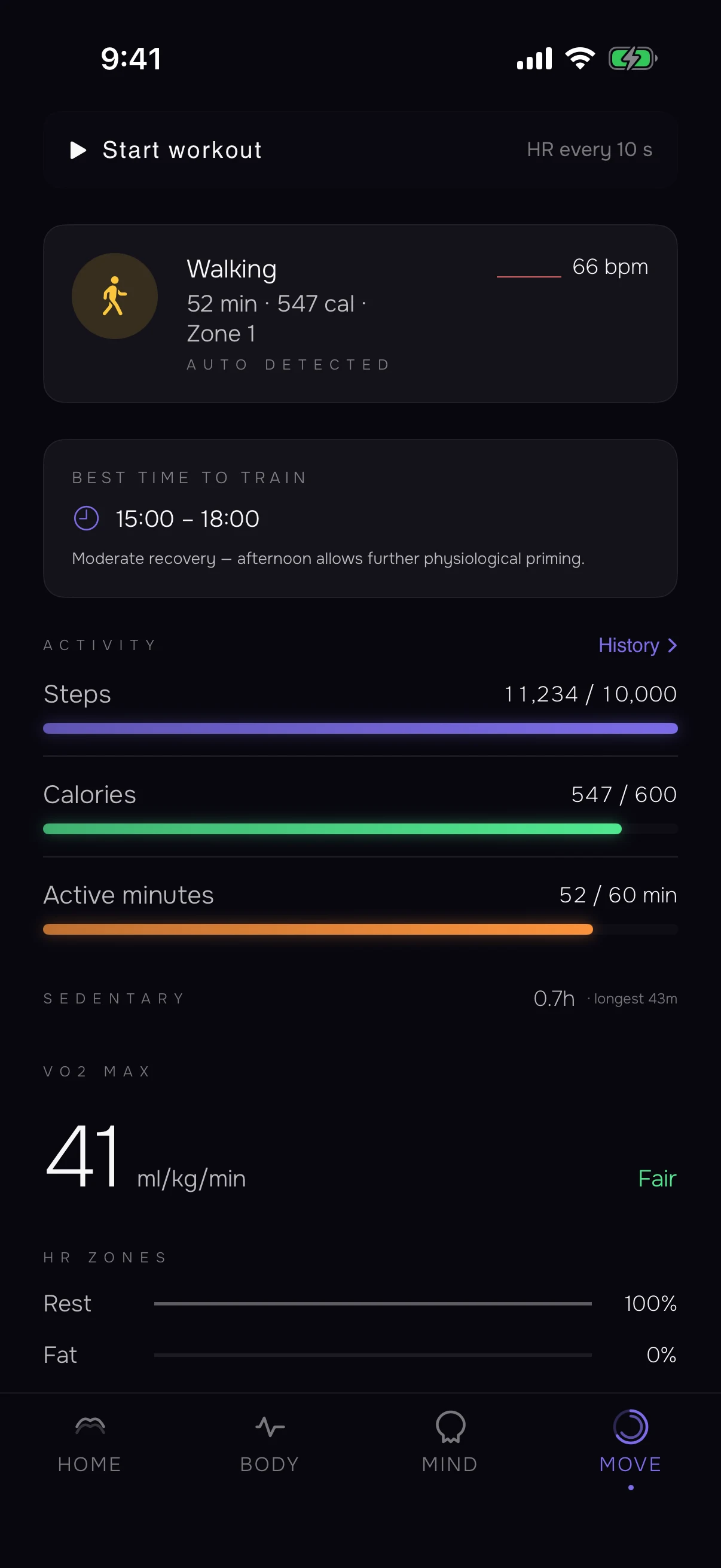
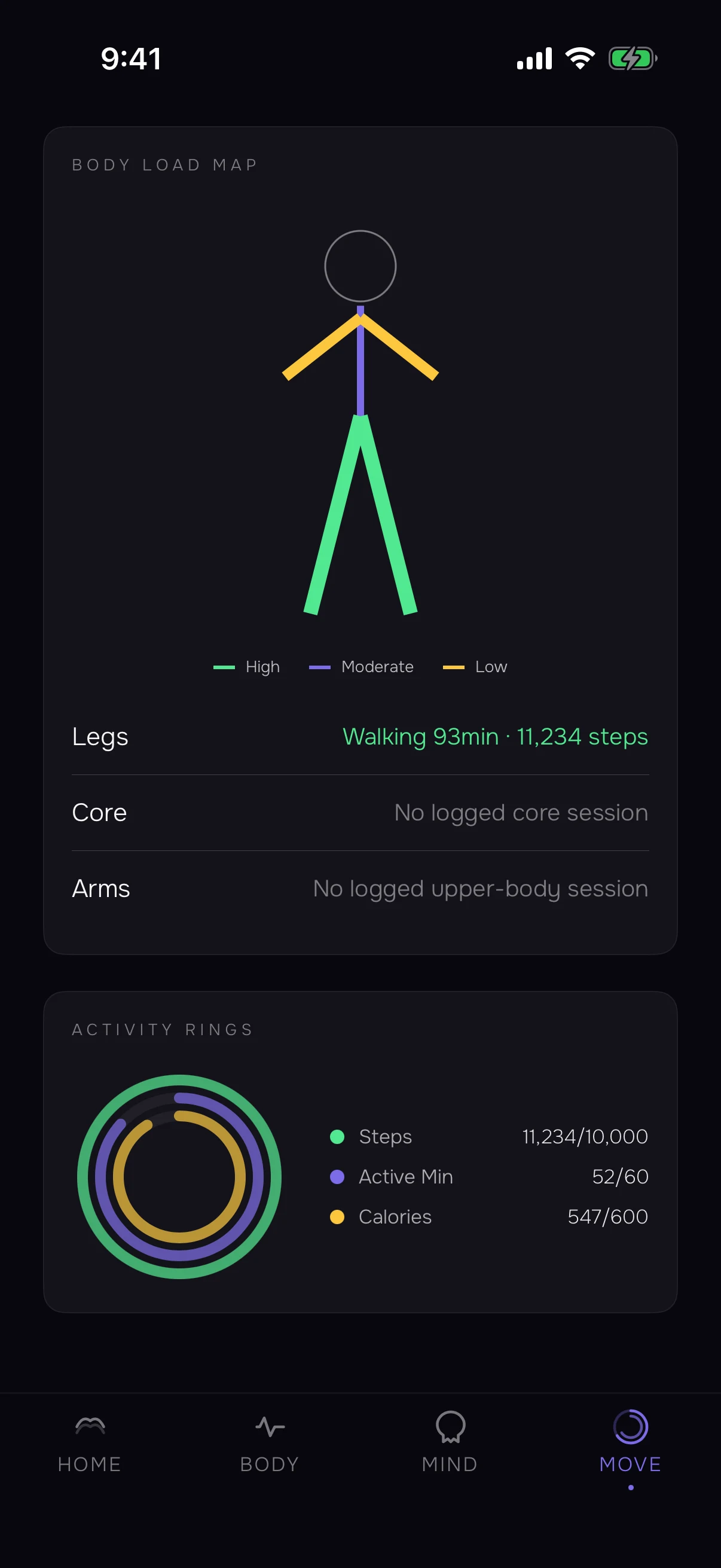
Neither screen tells anyone to train. They describe what happened and what state you were in when it did — the decision stays with the person.
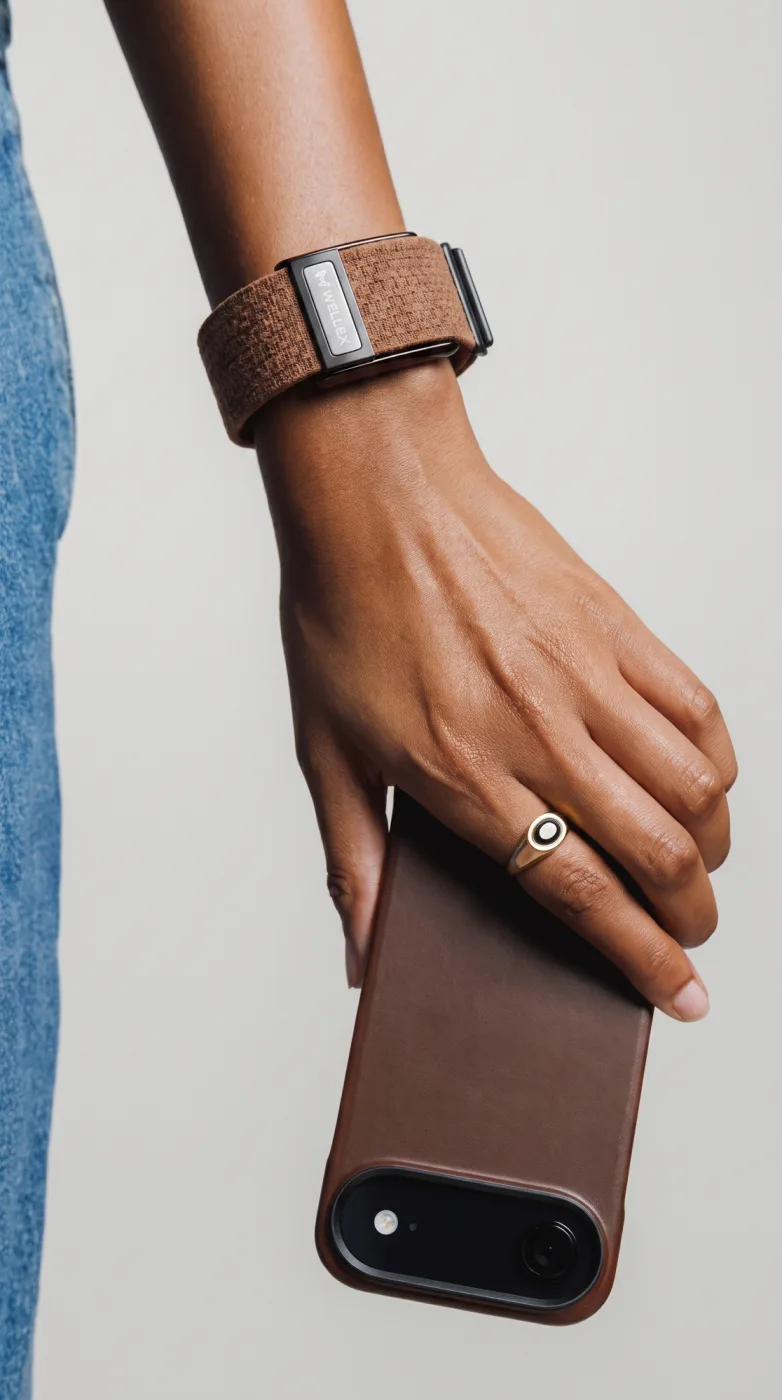
A short brief that names what changed, and what to do about it today.
Not another dashboard. Three things: a short morning brief on your own week in plain language, a panel that answers questions about your own readings, and a live chat when a person is needed. All of it in the language the app is set to.
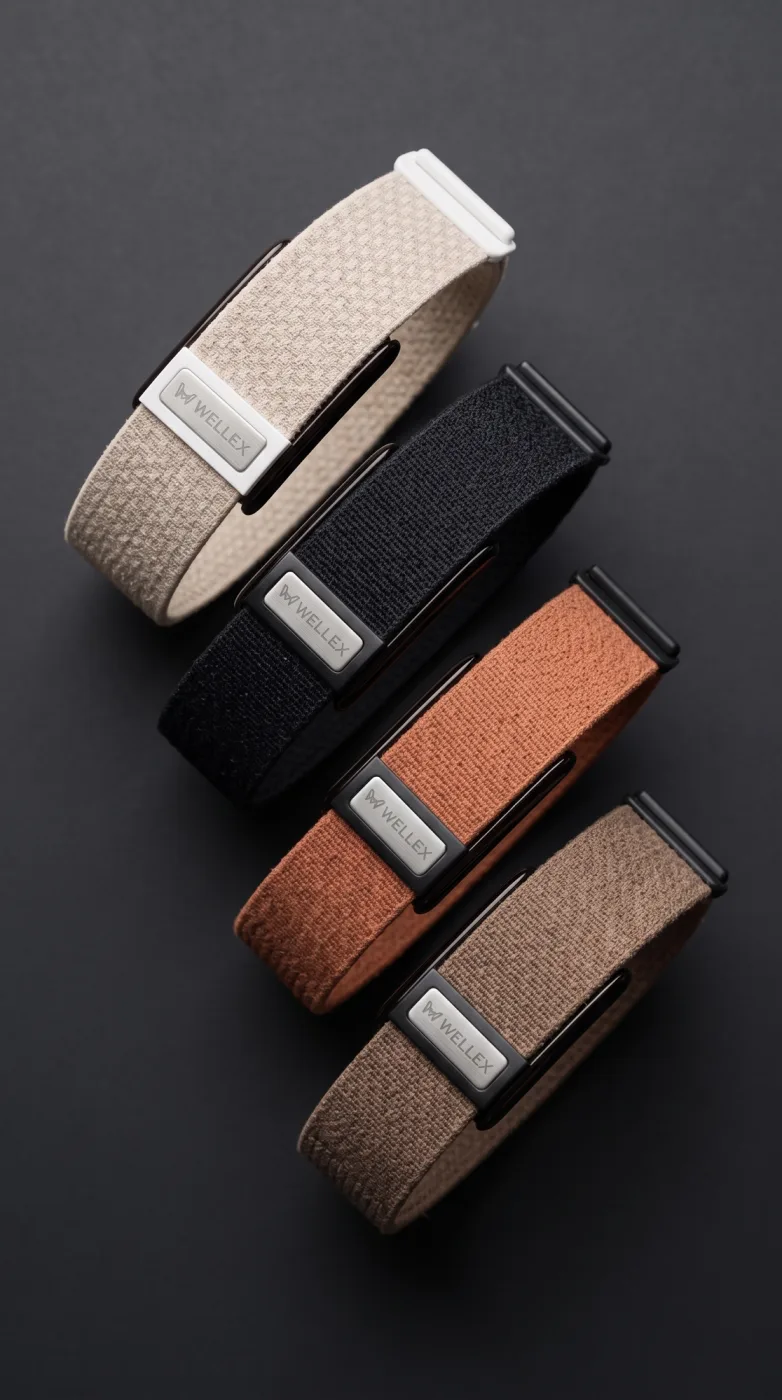
It has to survive a meeting as well as a run.
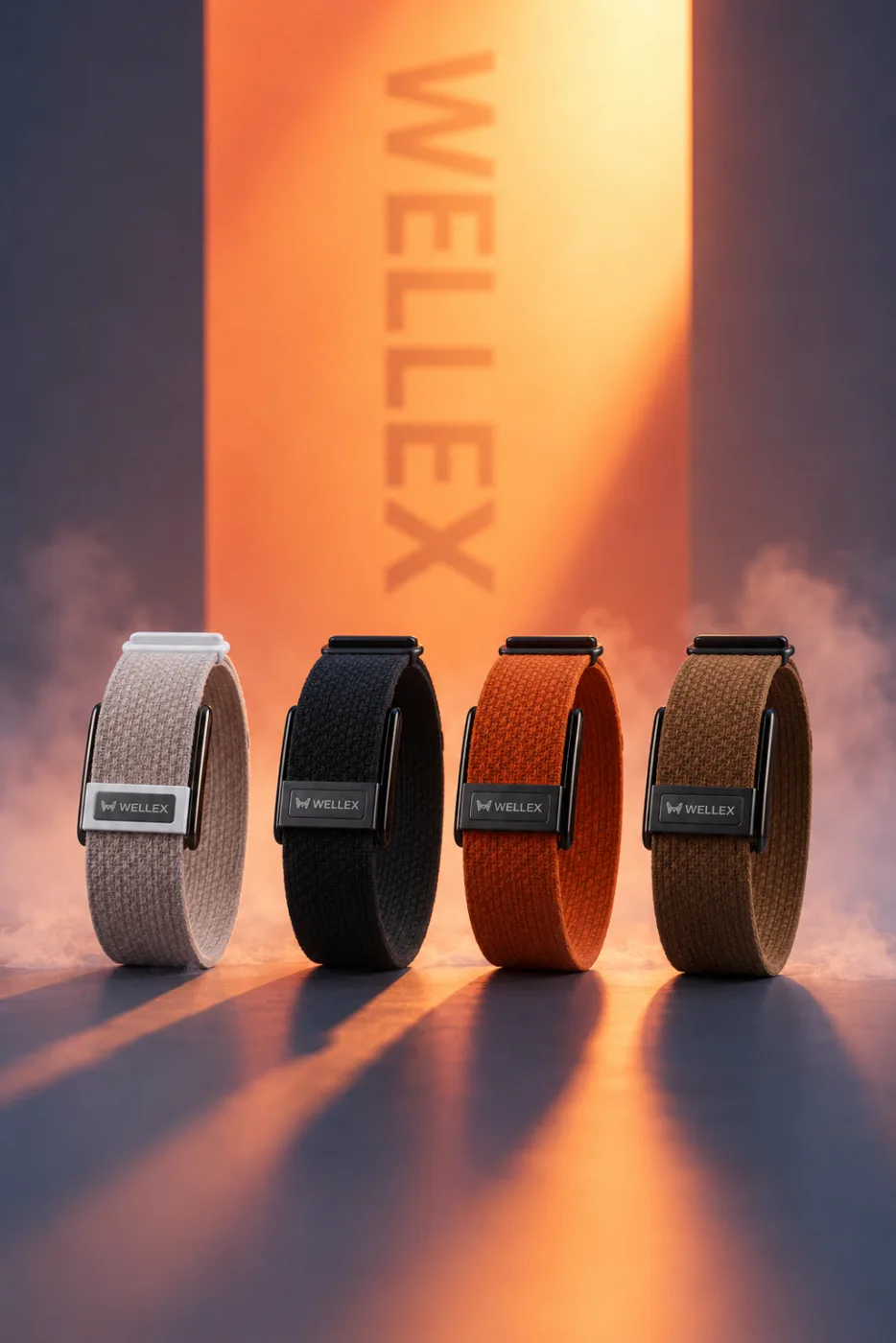
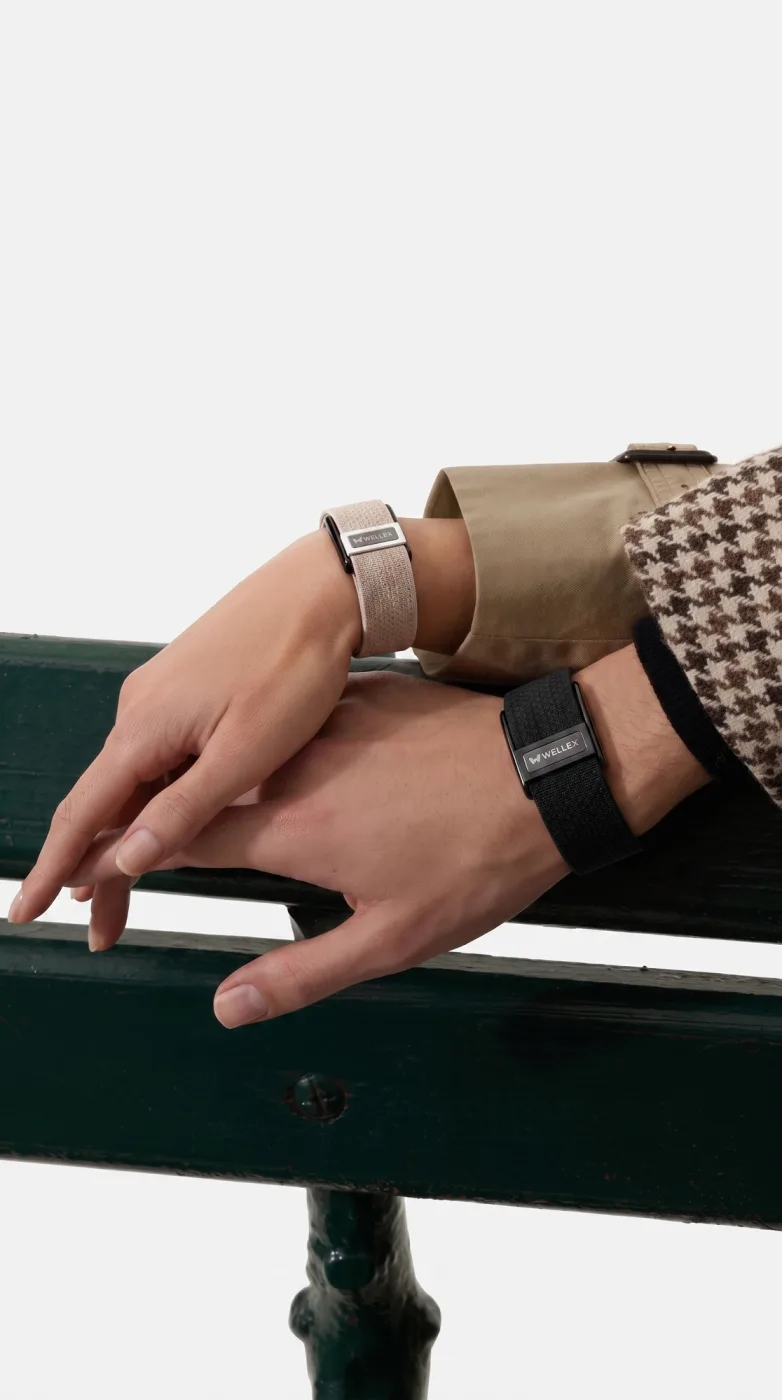
Woven textile rather than sport silicone, in a small set of colours chosen to disappear against ordinary clothes. A device you are embarrassed by is a device you take off, and one that is off is one that measures nothing.
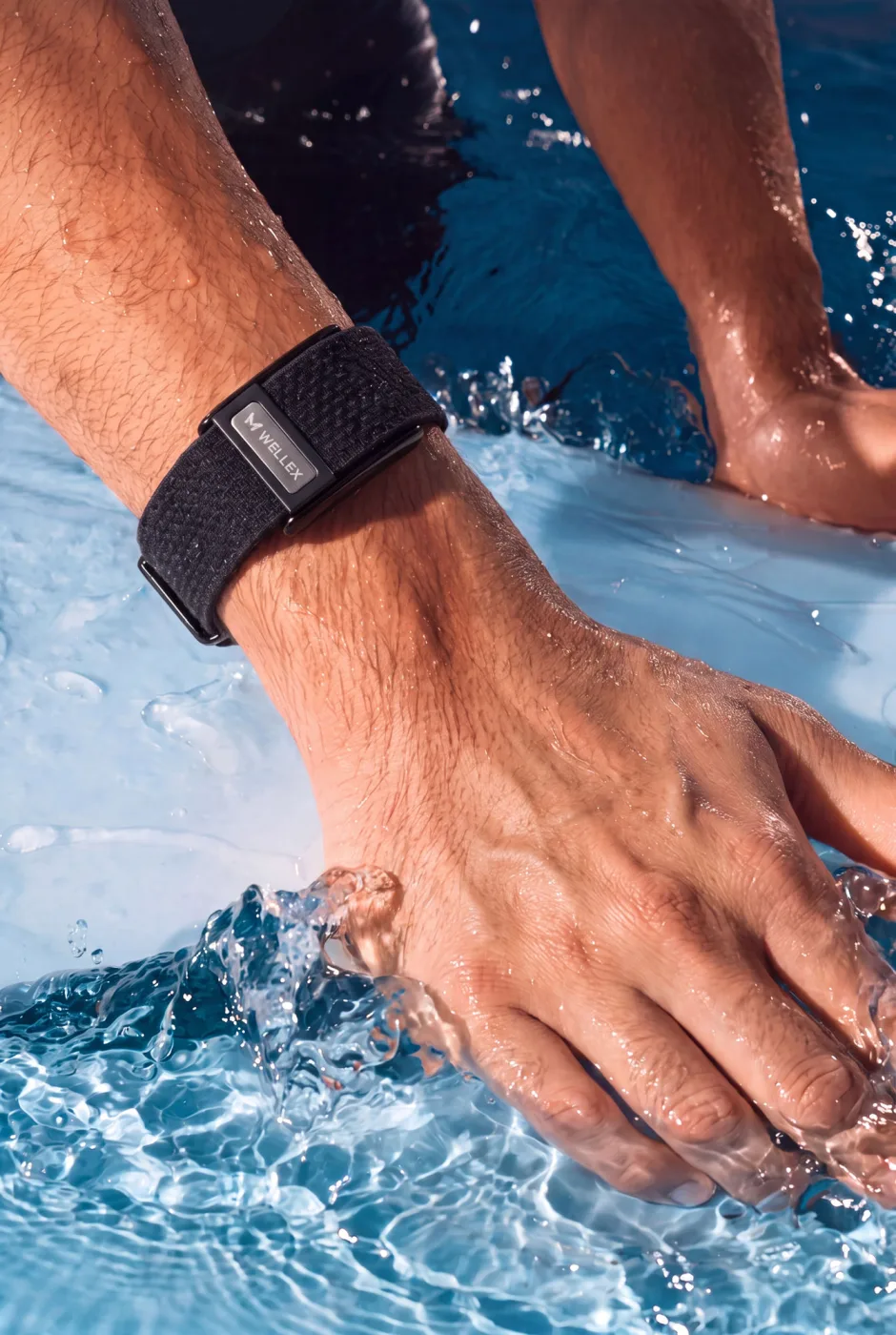
Showering, swimming, sleeping — none of them a reason to take it off.
Water is not an exception to work around, and charging does not have to compete with the night. Every removal is a gap in the record, so the product is designed to give you no reason to create one.
The band is free. What you pay for is turning it on.
Free worldwide shipping on both. Twelve-month warranty — a faulty unit is replaced at no cost. Cancel any time; the cancellation takes effect at the end of the period already paid for.

Money enters this company when somebody buys a product and keeps using it.
Nobody is paid for signing people up
There is no joining fee, no starter pack and no position in a structure to buy. A person pays to activate a band and then keeps a subscription running — and that is the only door money comes through.
The product has to stand alone
If the only reason to keep a subscription were introducing other people, this would be a different kind of business. The test we hold ourselves to is whether somebody who never introduces anyone still finds it worth nineteen dollars.
There is an earnings side to Wellex and it has its own deck. It was left out of this one on purpose: a product that only makes sense alongside a compensation plan is not a product.
The app asks before it collects, and every switch is yours.
- 01It tells you what it takes, firstThis screen appears before anything is collected. It names the signals, says what they are used for, and says where they are kept — on the device and on an encrypted server.
- 02Two of the three switches are optionalOnly the core monitoring is required. Personalised insight and anonymous analytics are yours to switch off, and the assistant behind the insight is named on screen rather than hidden.
- 03Not sold, not trained on, not shown upwardNo advertising code and no data sold. The provider is contractually barred from training on Wellex traffic. Nobody above you in a network sees your readings unless you switch that on yourself.
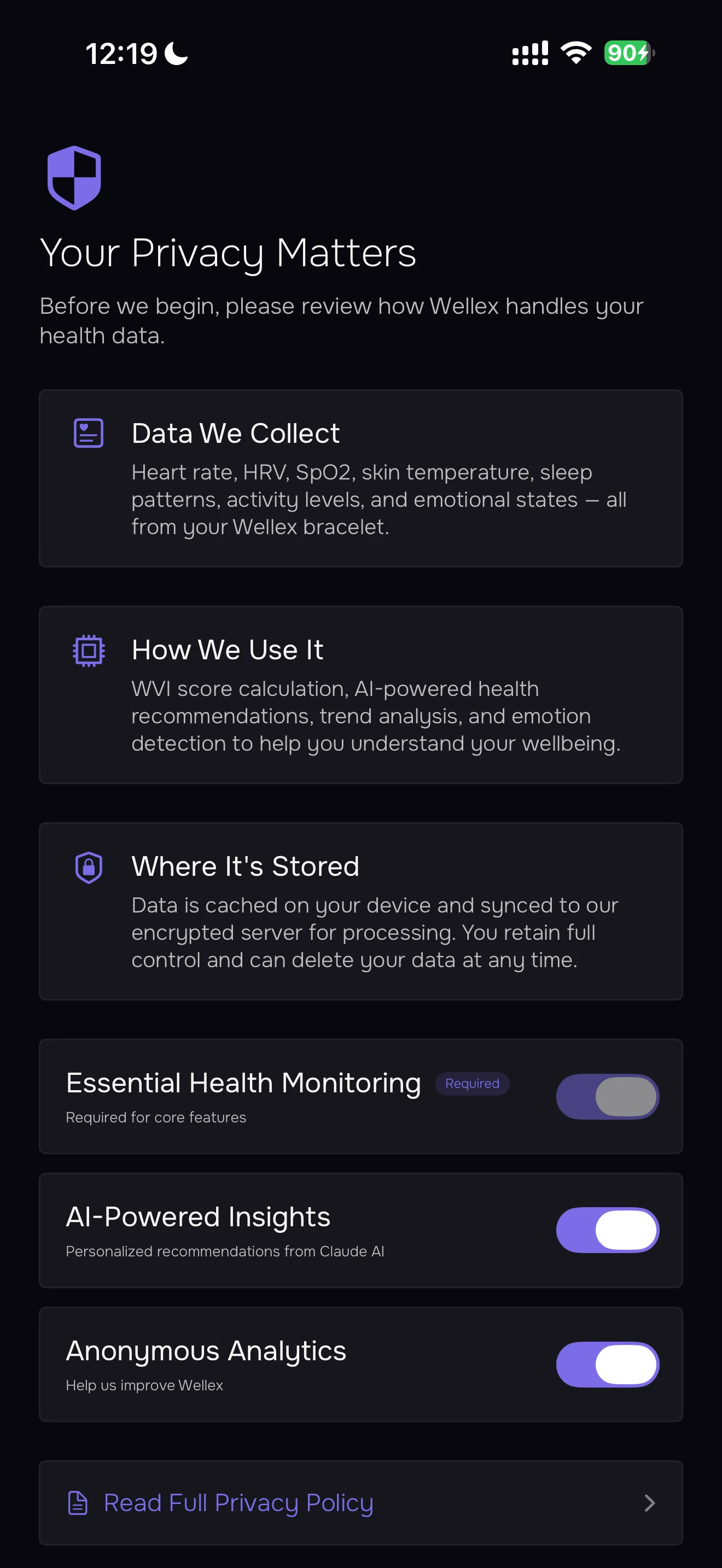
Export and erasure are ordinary buttons in the app, not a support request. What you switch off stays off until you switch it back on yourself.
What this product is not.
Not a medical device
It does not diagnose, treat, cure or prevent anything, and it is not a substitute for a doctor. If something in your readings worries you, that is a reason to see a clinician — not to consult the app harder.
Not a promise about your health
Wearing it changes nothing on its own. It makes a pattern visible; whether anything follows from seeing it is entirely up to the person wearing it.
Being clear about this is not a legal formality. A wellness product that lets people believe it is a medical one eventually harms somebody, and that is a worse outcome than a cautious sentence on a slide.
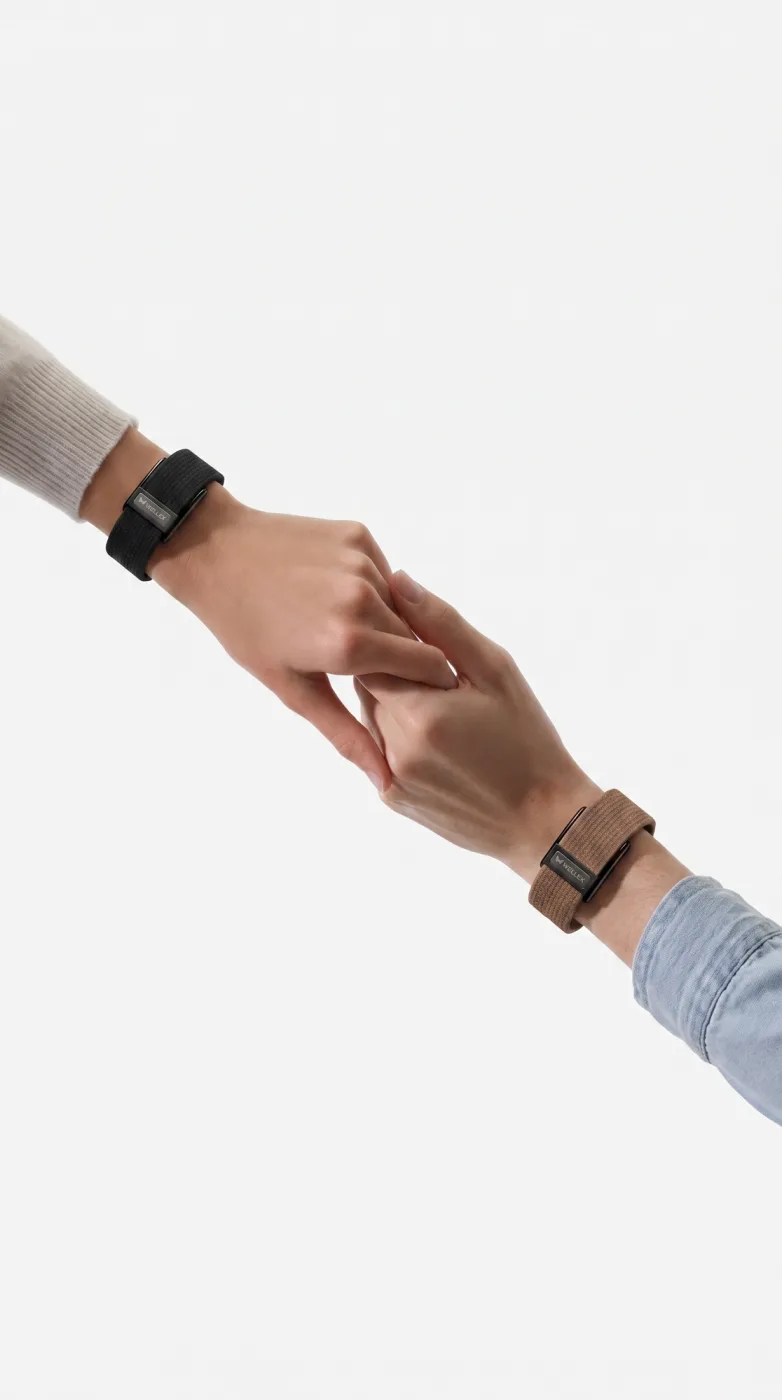
Four steps, and three of them take a minute.
The first fourteen days are calibration: the band is learning what is ordinary for you, and the index is not meant to mean much yet. Judge it after that fortnight, not during it.
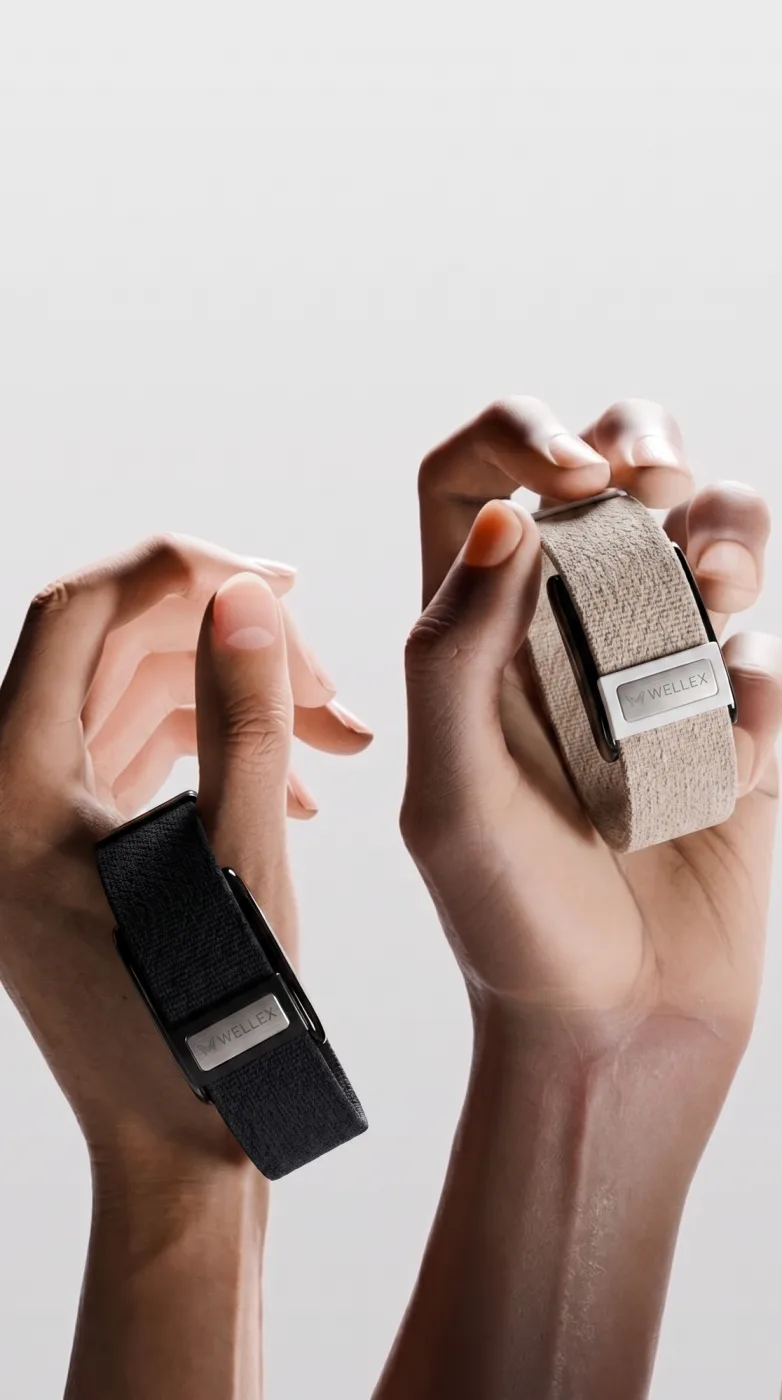

Wear it for a week before you form an opinion.
- 01Put it on and forget itIncluding at night. The first days are the band learning what is normal for you, which is what everything after is measured against.
- 02Change one thingAn earlier night, a lighter evening. One change at a time is the only way to see whether the index is telling you anything real.
- 03Then judge itIf the number never moved with what you did, the product did not earn its place. That is a fair test and it is the one we would want applied.
Shown by an independent Wellex partner. Wellex is a wellness product, not a medical device, and does not diagnose, treat, cure or prevent any disease. Nothing here is financial, investment or tax advice, an offer of securities, employment or partnership, or a representation of income or return. Calon Wealth Management Ltd, England and Wales, No 14813653.