There is a yield. This deck says how it works, not how much.
No rate is quoted anywhere in these pages, and that is deliberate. What follows is the mechanism as it runs today — where the money sits, what it is locked into, what you can take out and when. The number itself belongs in a conversation with your own figures in front of you.
01
How it works
One product, one lock, and what actually moves.
Why this exists at all
A product people keep using is worth more than a product people join.
01It is not the reason to be hereThe band and the index stand on their own — there is a separate deck that says so with no earnings in it. This side is what a person can do with money they already hold, not the argument for holding the product.
02It does not depend on a teamNothing on the following pages requires introducing anybody. Somebody who never speaks to another person about Wellex uses this the same way as somebody with a large one.
03It is not a bank and does not pretend to beMoney placed here is at risk, the way money in any yield-bearing arrangement is at risk. Nothing about a return is promised, and any sentence that sounds like a promise is one to correct on the spot.
Everything described here is what the system does today. Where a mechanism exists in the design but is not switched on, this deck says so rather than describing it as present.
The whole shape, before the detail
You place USDT, it sits for a fixed term, and what it earns accrues daily.
One product, not a menu
There is a single arrangement, not a shelf of them. Nothing to compare, nothing to pick wrong, and nobody has to understand a risk grid before they start.
The principal stays the principal
What accrues is tracked separately from what was placed. The two are never mixed, so at any moment it is clear which part is yours from the start and which part was earned.
Accrual is calculated daily from the monthly rate. That is a mechanical detail, and it is the reason the figure on screen moves every day rather than once a month.
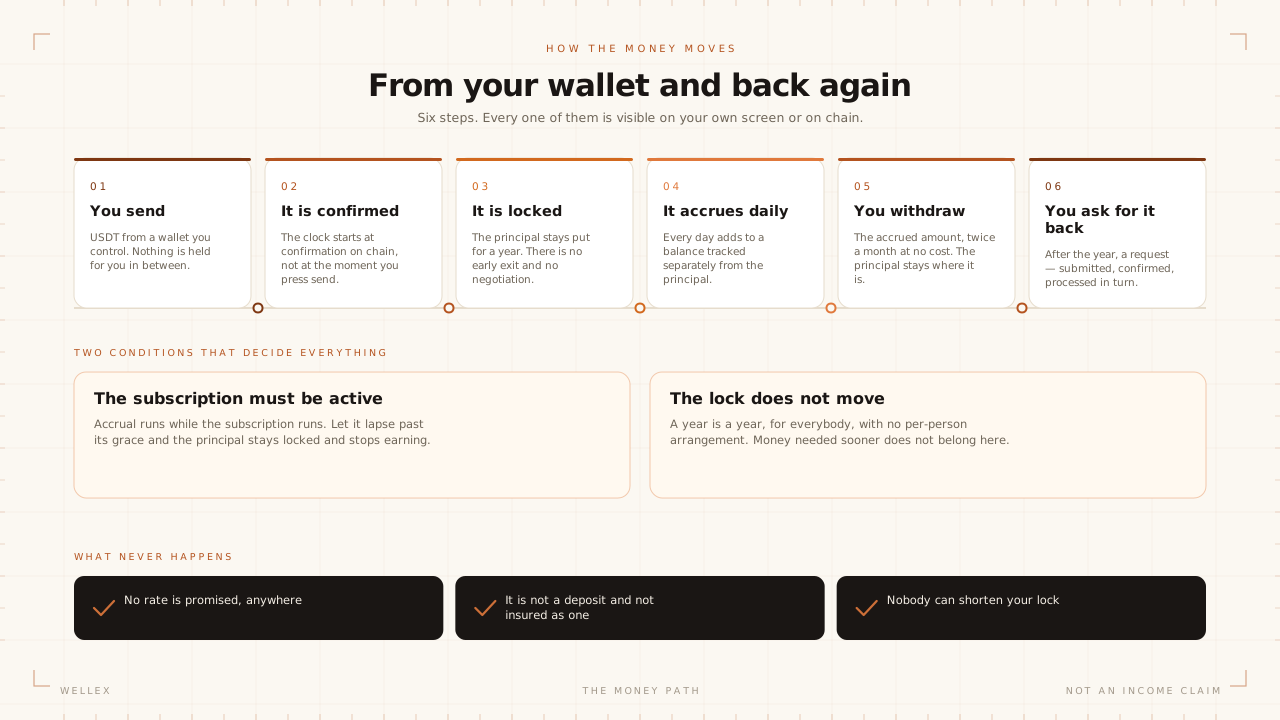
Follow the money, step by step
Six steps, and you can see your position at every one of them.
01 — You send USDTFrom your own wallet to your own position. Nobody holds it for you and no cash changes hands in a room.
02 — The chain confirms itUntil the transfer is confirmed it does not count. That gap is short, and it is why the clock starts at confirmation rather than at sending.
03 — The position opensThe amount placed is recorded as principal, the lock starts, and the rate for that position is set.
04 — It accrues every dayA daily amount is posted against the position and held separately from the principal. The on-screen figure updates each day for that reason.
05 — You take it or add itWhat has accrued is withdrawn to your wallet, or put back into the principal. The principal itself does not move.
06 — After the year, you askThe principal comes out on request, confirmed with a second factor and processed in turn. Until then it keeps working.
Each of the six steps writes a record that can be opened directly. The sequence runs on chain for that reason.
Where the money actually works
Your part is two steps. The other five happen to the money, not to you.
Your moneyThe treasury, on chainBack to you
01You fund in USDTFrom whatever chain you already hold it on.
02One settlement layerRouting happens underneath; every balance settles in one place.
03Into the treasuryA public contract you can open in a block explorer.
04Allocated by riskThe calm base first, the rest capped.
05Capital worksAcross vetted venues, moving as conditions change.
06Realised, then paidOnly after it is earned. A reserve smooths the months.
07You earn in USDTYour deposit is never touched and comes back whole.
Partner commissions are calculated against the deposits a network brings, but paid out of company subscription revenue — never out of a member’s deposit. The treasury is public and you are meant to open it.
05b
The part to be honest about first
It is locked for a year, and there is no early exit.
01Say the lock before the yieldA person who hears the term after they have heard the return feels sold to, and they are right to. Said first, it is a condition. Said last, it is a catch.
02Money that is needed soon does not belong hereThe correct advice to somebody whose money has a job in the next twelve months is not to place it. Saying that costs one conversation and prevents a much worse one later.
03There is a floor on the arrangementA rate that has been set for a position is not lowered afterwards. Changes to how rates are calculated can raise what somebody receives; they are not applied downward to what is already running.
The lock is the same for everybody and is not negotiable per person. Anyone who tells a prospect otherwise is describing something that does not exist.
The condition nobody asks about
It accrues while the subscription runs.
01The subscription keeps it aliveAccrual is only calculated for a position whose subscription is active. Let it lapse past its grace and the principal stays locked while it stops earning. Say this before somebody places money, not after.
02It starts at confirmation, not at sendingA deposit accrues from the moment it is confirmed on chain, not the moment it leaves a wallet. The gap is short, and saying so in advance turns a worried message into a nod.
03A flagged account is pausedAccrual stops while an unresolved integrity flag sits on an account. It is rare, it exists so that nobody’s figures are built on somebody else’s shortcut, and it resumes when the flag is cleared.
None of the three is a penalty and none is anybody’s discretion — each is a condition written into how the system runs. Heard at the start they are terms; met later they feel like a trick.
The sentence that ends careers
Nothing about a return is guaranteed. Not the rate, not the timing, not the principal.
This is the line regulators look for. It is also the easiest one in the business to cross by accident: a rate said out loud becomes a promise the moment somebody repeats it. Describe the mechanism, show where the figure lives, and let the person read it themselves.
What you can take, and when
What has accrued can be withdrawn while the principal stays where it is.
Twice a month at no cost
Two withdrawals of what has accrued are free each calendar month. Beyond that a fee applies, which exists to stop the arrangement being used as a daily wallet rather than to punish anybody.
Or it can go back in
Accrued amounts can be added to the principal instead of withdrawn. There is a floor on the size of such a move and a fixed cost to it — below that floor the round trip is not worth what it costs to send.
Both routes are ordinary functions, not a request to anybody. What they cost is shown before the action, not after it.
The part people find out late
Moving money costs something. Every cost is shown before you press anything.
01Two withdrawals a month are freeBeyond that a percentage of what you withdraw is taken. It exists so the arrangement is not run as a daily wallet, not to punish anybody.
02Putting it back has a floor and a fixed costBelow that floor the round trip is not worth what it costs to send, so it is refused rather than quietly eating the amount. Above it, the cost is fixed and visible in advance.
03Nothing is deducted you were not shownEvery figure in this slide sits on the screen where the action happens. Read them there rather than trusting anybody’s memory, including mine.
Say this part out loud early. Costs discovered after the fact are the single most common reason somebody stops trusting the person who introduced them.
The second question you will be asked
Nothing happens by itself when the year ends.
It keeps earning until you ask
The end of the lock closes nothing. What was placed carries on accruing on the same terms until somebody actually asks for it back.
Getting the principal out is a request
It is submitted, confirmed with a second factor and processed in turn — not a button that pays out on the spot. Part can be taken and the rest left running.
Withdrawals above a threshold require enhanced identity verification before processing. The threshold is set by compliance policy, not per partner.
02
How to talk about it
What to say, what never to say, and where the number lives.
Six sentences about the return, and their better versions
Each of these is a promise you did not mean to make. Each has a version that says more.
“You will earn this much.”An income representation, whether or not it is true. Say instead: “Here is where the yield comes from and where you read your own figure.”
“The rate is guaranteed.”Nothing about a return is guaranteed. Say instead: “Here is what the rate depends on, and here is what happens if it changes.”
“You can pull out whenever you want.”You cannot. Say instead: “The principal is locked for a year; what it earns can be taken out along the way.”
“It is safer than a bank.”It is not, and the comparison invites a regulator. Say instead: “This is not a deposit and it is not insured like one.”
“Put in what you can, we will sort it out.”Anybody rushed into a year-long lock leaves angry. Say instead: “Only money that has no other job for twelve months.”
“The better your index, the more you earn.”That mechanism is designed and not switched on. Say instead: “Today the rate follows your plan. If that changes, you will hear it from us first.”
The last one is the newest and the easiest to get wrong, because it is written down in older material. Anything you read that ties a rate to the wellness index is ahead of the build.
Designed, not running
Two ways of setting a rate exist on paper. Neither is switched on.
A rate that follows the index
The design ties what somebody receives to how they actually live, with the wellness index moving the rate. It is built and it is turned off. Today everybody on the same plan receives the same treatment.
Steps that rise with your own stake
A second design raises the step as somebody’s own placed amount grows, with earlier participants reaching each step sooner. Also built, also off.
Both will likely run. Neither has a date, and a date that slips costs more than an honest “not yet”. Say what is running now and say that the rest is coming without saying when.
Asked in the first conversation
Six questions about the money, answered the same way.
How much does it pay?Open your own screen and read it there. A figure said in a room becomes a promise; a figure read on a screen is a fact about your own position.
Can I get my money out early?No. The principal is locked for a year. What it has earned can be withdrawn along the way.
What is the smallest amount?Small enough that nobody has to commit a serious amount to try it, and the exact figure is on the screen where you place it.
Can the rate go down?A rate already set for a position is not lowered afterwards. Nothing beyond that is promised, and nobody should say otherwise.
Do I need a team for this?No stream in this arrangement depends on introducing anyone. It is administered separately from the partner network.
Is this insured?Not the way a bank deposit is. Money placed here is at risk, and anybody who is not comfortable with that should not place it.
None of the six answers contains a figure. Describing a mechanism and stating an amount are treated differently in financial promotion rules.
Before you raise this with anyone
Three things, and the order is the whole point.
Lead with the product, never with this
Somebody who arrives for the yield leaves when the yield is slow. Somebody who arrives for the band stays through it. The order of the two conversations decides which kind of team you build.
Place something yourself first
You cannot describe a year-long lock you have not lived with. Having your own position, however small, changes every answer you give from a script into an account.
Third: read the six sentences on the previous page until you no longer have to think about them. They are the ones that cost the company, and they come out under pressure.
If you remember one thing
Describe the mechanism. Let the screen show the number.
Everything in this deck follows from that one habit. A mechanism explained out loud is a fact anybody can check; a figure said out loud is a claim somebody will hold you to. The first builds a field that lasts, the second builds a file at a regulator.
Next step
Open your own screen before you describe it.
01Read your own figureIt is on the screen where the position lives. Knowing where it is matters more than knowing what it says — that is what you will be showing.
02Say the lock out loudA year, no early exit. Practise saying it before the yield rather than after, until the order feels natural.
03Then the six sentencesLearn the corrected version of each. Under time pressure the uncorrected version is the one that gets said.
Shown by an independent Wellex partner. Nothing here is financial, investment or tax advice, an offer of securities, employment or partnership, or a representation of income or return. Amounts placed are at risk, are not a deposit and are not insured as one. Wellex is a wellness product, not a medical device. Statutory rights are not affected. Calon Wealth Management Ltd, England and Wales, No 14813653.